ALL ABOUT SCHOOL BOARDS-FAQS
Activism
is in the Air

SHAKE UP THE STATUS QUO
With activism in the air across America, you may be wondering where the next great wave of change-makers is coming from. If so, we have but one question to ask: Why not look in the mirror?
The outsiders, the newcomers, the rookies, and the novices taking part in public life today are no different from anyone else. That is, with one small distinction. They’ve decided that they no longer want to wait for change, they want to be the change.
The best time to start? Right now. The best place to begin? In your own community. And, especially at the local level, no public arena stands to benefit more from your participation than education. And there’s no organization better poised to drive meaningful, results-driven impact than your local school board.
If you believe growing businesses and a healthy economy start with a talented and skilled workforce, you care about education.
If you believe that cities, towns, and neighborhoods are stronger, safer, and more prosperous when we stand together with young people and listen to what they have to say, you care about education.
If you believe America’s best days still can be ahead of us, rather than behind us, you care about education.
And if you care about education, you definitely care about school boards.
And so, when more and more people are looking for new ways to make their voices heard, amplify their priorities, and multiply their good works, we at XQ would like to suggest that your local school board—right in your own backyard—is wonderfully equipped to lead the charge.
If you believe that every student—not just some—deserve an effective education that prepares them for college, careers, and life, then school boards are for you.
If you believe that the time to take action is now, then school boards are for you.
And the best part about our local school boards? They’re for the community, by the community, of the community. It’s never too late—or too early—to get involved.
So step up and find out what’s happening with your local school board. Attend a meeting—it’s a form of public service! Then use this guide to figure out what more you can do to shake up the status quo, strengthen your community, and help transform your local high schools.
Here are the numbers:
There are more than 14,000 school districts in the united states governed by more than 95,000 school board members. These leaders help direct the expenditure of more than $600 billion annually to teach more than 50 million students.
If you're ready to get active in your community, why not get involved with your local school board?
Why School Boards Matter: Power in Action
What exactly is a school board?

School boards exercise local control over education—and more than that, they articulate and pursue a community’s hopes for its young people. All school boards share a common purpose: to establish a vision for the community’s schools that reflects the needs of the students, the wishes of the voters, and the consensus of the community—and to work with the superintendent to make that vision a reality.
Engaged and supportive school boards are essential for making the changes that need to happen in our high schools so students can be prepared for the modern world —changes like expanding access to rigorous courses, implementing schedules that allow for project-based learning, and making sure teachers have the right professional development and support. A dedicated school board helps steer a steady path, even when change is difficult or controversial.
School boards partner with the superintendent and teachers, families, and students to make sure every student gets a great education in the district’s schools. They sometimes work with employers, colleges, and nonprofit organizations to break down the barriers that separate classrooms from communities and open up new, real-world learning opportunities for local students—and pipelines for employing future graduates in local businesses.
A school board is a group of committed citizens who embrace an active leadership role within their district’s schools. And with automation affecting a growing number of jobs, great high school education is more important than ever.
ELECTED VS APPOINTED BOARDS
Depending on the jurisdiction you live in, board members may be either elected or appointed. Appointed boards are named by the mayor, county commissioner, city council, or a combination of these officials. Regardless of how its members are selected, a school board is a local version of the quintessential American representative government. Its members are vested with the authority to act on behalf of those they serve and to make big decisions for their district.
WHAT DO SCHOOL BOARDS DO?

Set the Vision
The school board establishes a clear vision and high expectations for quality teaching, engaged learning, effective school leadership, and safe, positive school culture—all essential for students to thrive.
Advance Policy
The school board also sets practical guidelines for transforming its vision into reality. Through policy, the school board influences nearly every aspect of school operations.

Demonstrate Accountability
High academic standards, transparency, and accountability undergird world-class education. School board members share responsibility with educators for the performance of the district’s schools and students.

Lead the Community
An effective board understands that it’s essential to build strong relationships with parents, teachers, students, and community members. Through dialogue, school board members hear and respond to community concerns and explain the district’s priorities to the public.
Forge Consensus
It’s only natural that a school board faces issues that inspire a diversity of strong perspectives and passionate beliefs. But the goal always remains the same: to pursue consensus, to reconcile differences, to reach compromises—all in service of students.
WHO SERVES ON SCHOOL BOARDS?
School boards are made up of everyday people with interest in how education affects the community and how the community affects local schools. Just by making a commitment and following through steadily and with determination, one school board member’s voice can transform students’ lives, reset and reshape high school priorities, and even change the trajectory of an entire community.
Serving as a school board member isn’t just for educators or just for parents with students currently enrolled. It isn’t just for those with incredible amounts of spare time or those with vast personal resources. The strongest school boards include people who represent many points of view, a wide array of experience, and a diversity of backgrounds and can still work together collectively.

DID YOU KNOW THAT CHARTER SCHOOLS HAVE SCHOOL BOARDS?
In the 2016-17 school year, there were almost 7,000 public charter schools in the United States, serving an estimated 3.2 million of the nation’s 50 million public school students. That means over the past 10 years, enrollment in public charter schools has nearly tripled. Demand for these schools has grown, too, and many now have long waitlists.
Charter schools are indeed public schools, governed independently but publicly funded and accountable. And yes, they have school boards, too—although charter boards operate differently from district school boards. In most states, each charter school or network operates as a 501(c)3 non-profit organization and is overseen by its own volunteer, non-elected board. (Some states also permit charter schools that are operated by private, for-profit companies, and their board requirements differ from those of nonprofit boards.)
A charter board has significant responsibility for ensuring that the school provides a great education, complies with relevant laws and regulations, and uses public resources responsibly. It sets the vision for the school and makes critical decisions about resources, school leadership, and strategic planning.
Charter schools need board members who bring relevant skills and experience to the table, represent a range of backgrounds and perspectives, and are deeply committed to providing an excellent education for every student. Serving on a public charter school board can be a powerful way to improve public education.
If this kind of public service appeals to you, reach out to a local charter school, your school district, or a charter school support organization in your city or state and ask how you can get involved. Charter Board Partners is another great resource; check out their website for advice on whether or not charter board service is right for you and help with finding a board that needs your skills.
Source: Education Board Partners
WHY SHOULD SCHOOL BOARDS FOCUS ON HIGH SCHOOLS?
Most school boards are responsible for schools from kindergarten through grade 12. But when it comes to local school systems, high schools deserve special attention. High school students are eager to become tomorrow’s leaders, thinkers, and difference makers. But in survey after survey, high school students across the country report being unchallenged, unengaged, and unprepared for the real world.
So let’s ask ourselves, is “boredom in the classroom” a Republican issue? Is “disengagement from learning” a Democratic issue? Of course not. Whatever our politics, let’s acknowledge that rethinking high school isn’t a blue or a red issue; it’s an American issue. And it’s an issue for every community in America.
What High School Students Say About Their Schools...
• Only a third of eleventh graders report being engaged in school.
• Only half of all high school students believe their school has helped them develop the skills and knowledge they will need in college.
• Less than half say their school has helped them figure out which careers match their skills and interests
STRONG HIGH SCHOOLS = ECONOMIC OPPORTUNITY
A rigorous, engaging high school education is essential to success, both for individuals and for the larger economy. School performance is linked to higher earnings and lower unemployment. For communities, a prepared workforce helps attract and retain desirable employers. So how are we doing in the United States? Not so well.
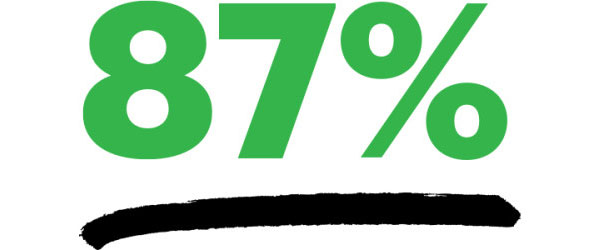
Eighty-seven percent of high school students want to go to college. But fewer than half graduate fully prepared for college coursework.

Closing the racial achievement gap alone would boost American GDP by more than a trillion dollars a year.

As a result, students and their families spend more than $1 billion every year for remedial courses in college.
Eighty-seven percent of high school students want to go to college. But fewer than half graduate fully prepared for college coursework.

Closing the racial achievement gap alone would boost american GDP by more than a trillion dollars a year
These numbers aren’t just emotionally sobering, they’re economically depressing. When high schools don’t prepare students to fulfill their ambitions, dropout rates climb higher and college readiness drops lower.
Economists estimate that this waste of time, energy, and human potential imposes the equivalent of a “permanent recession” on the American economy. And with automation affecting a growing number of jobs, great high school education is more important than ever.
Addressing these problems in our education system isn’t just the right thing to do, it’s the smart thing to do. Rethinking, redesigning, and modernizing high schools is THE economic opportunity of the century.
WE CAN’T BE A GREAT COUNTRY WITHOUT GREAT HIGH SCHOOLS
Great high schools make promising, productive futures possible for every student. They serve the needs of local families and local businesses. They contribute to the long-term civic and economic health of a community. They keep our nation strong, vibrant, and competitive in an ever-changing global economy.
At XQ, we believe that high schools are the fulcrum for improving our entire education system, from preschool through higher ed. Yet, for all the continuing debate around public education, high schools are the one institution that hasn’t received due attention in recent years.
Stronger high schools inspire improvement in the earlier grades by setting higher expectations and modeling the kind of real-world, engaging learning students and families value.
Stronger high schools also drive change in postsecondary education by working in partnership with local colleges to create efficient and effective pathways for students from all walks of life—and, of course, by graduating students who are ready to succeed in college, career training, the military, the workforce, and life overall.
That’s why rethinking high schools from the bottom up isn’t a political issue—it’s an American imperative.
By refocusing our efforts—from teaching high school students what to think to how to think, from asking them to solve problems at the end of the chapter to engaging them in real-world problem solving—we can better prepare students, as well as our communities, our institutions, and ourselves, for future success.
WE CAN’T BE A GREAT COUNTRY WITHOUT GREAT HIGH SCHOOLS
High School Improvement: An American Priority
IT'S TIME TO STEP UP AND GET INVOLVED
If we truly believe in making sure all young people get the education they need for the future—an excellent education, second to none—then local communities must step up to the challenge.
If we want our students to walk out of high school with the knowledge, skills, and motivation to shape their own lives, and the society they will live in as adults, then it’s time for us to consider what we’re willing to ask of ourselves. Where can we contribute our talent, time, and energy—however much we have to spare—for the most impact? The most public good? The most return on investment?
Because education is inherently local, it’s inherently personal.
For our education system to thrive, it needs people, it needs presence, it needs partnership. And when our high schools thrive, local businesses thrive, our civics thrive, our common interests thrive. America thrives.
For all these reasons—and so many more—there’s no arena more deserving of your time, attention, and participation than rethinking high school. It is our goal, with your spirit, to make it an American priority.
Workbook 1.
START RETHINKING HIGH SCHOOLS IN YOUR COMMUNITY
Real change comes when high schools and community members like you work together in a strong partnership to improve our children’s educational future. A partnership that’s built on a strong foundation of trust, honesty, and a genuine commitment to improving student achievement. A partnership where everyone involved can freely acknowledge the community’s challenges, identify its strengths, and work hand-in-hand to improve both. What role can you play? How can you contribute? The workbook below will help you think through what you can do to help and how your high schools can strengthen the community and vice versa.