Share This Post

Math’s Unlikely Teacher: A Robot

The summer before she started ninth grade at South Bronx Community Charter High School, Sophia Romero was feeling pretty nervous. She’d pictured the building, the heightened workload, the teachers — and braced herself for classes that’d be harder than anything she’d known in middle school.

Math, in particular, was always a struggle. “Sometimes I get lost with all the Xs and Ys,” Sophia explained. “It’s all about learning formulas, and it’s a lot of memorizing — it doesn’t always feel real.”

Like many students, much of Sophia’s math education until now had revolved around memorizing steps off a whiteboard, and algorithms copied down repetitively until they stuck in her mind. When students make that jump from middle to high school — immersed in a world of abstract algebraic symbols — it’s easy for math to feel increasingly less tangible.

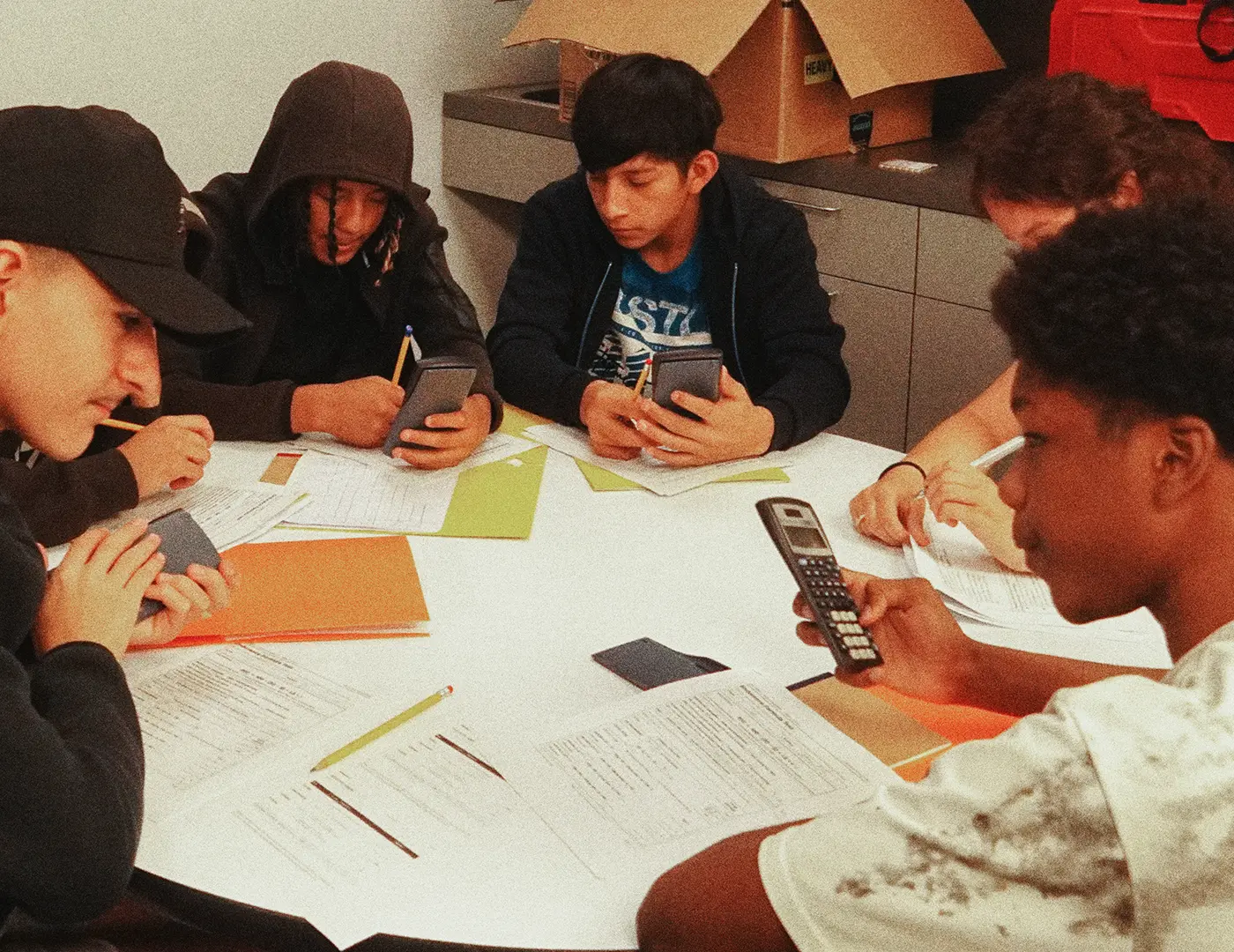
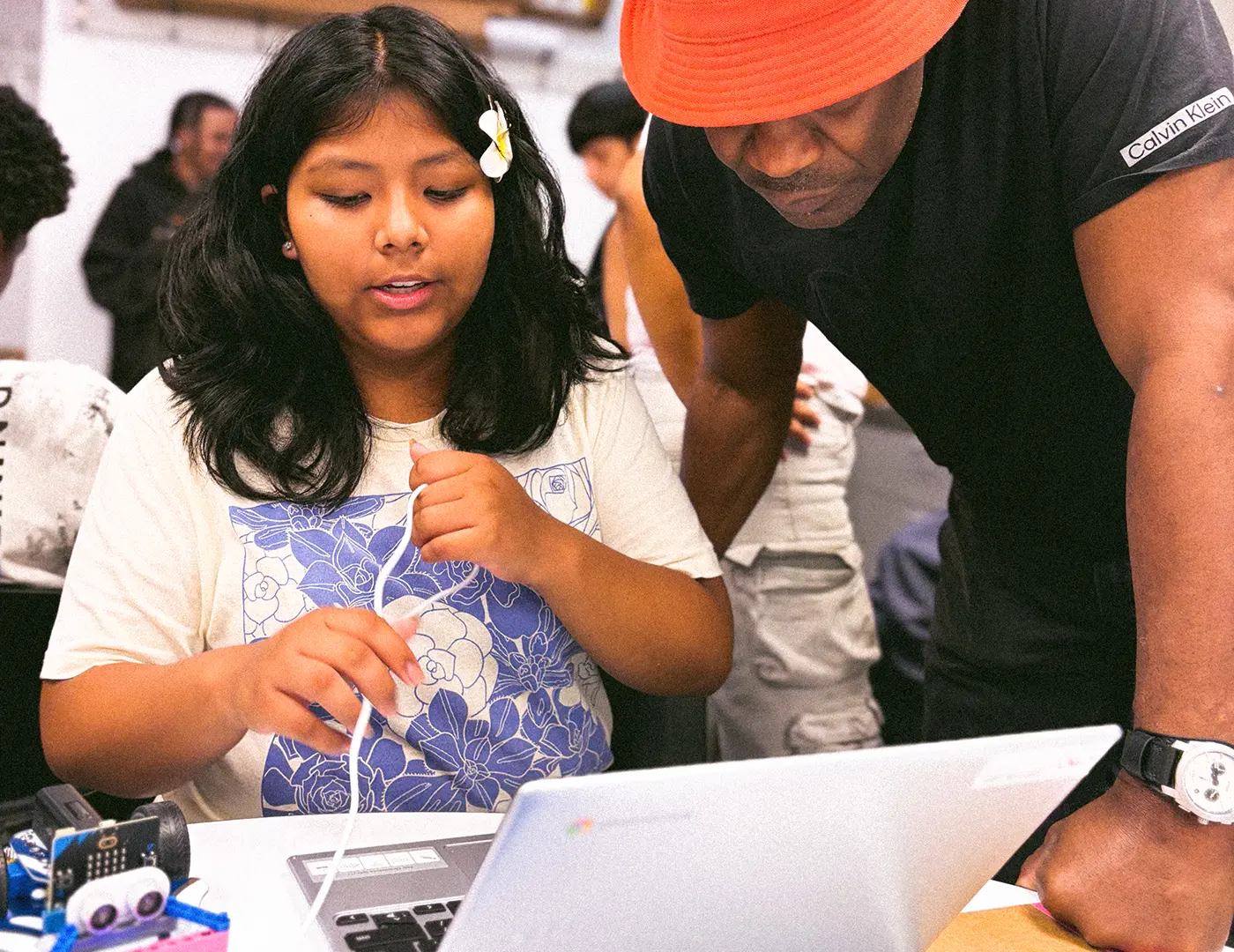
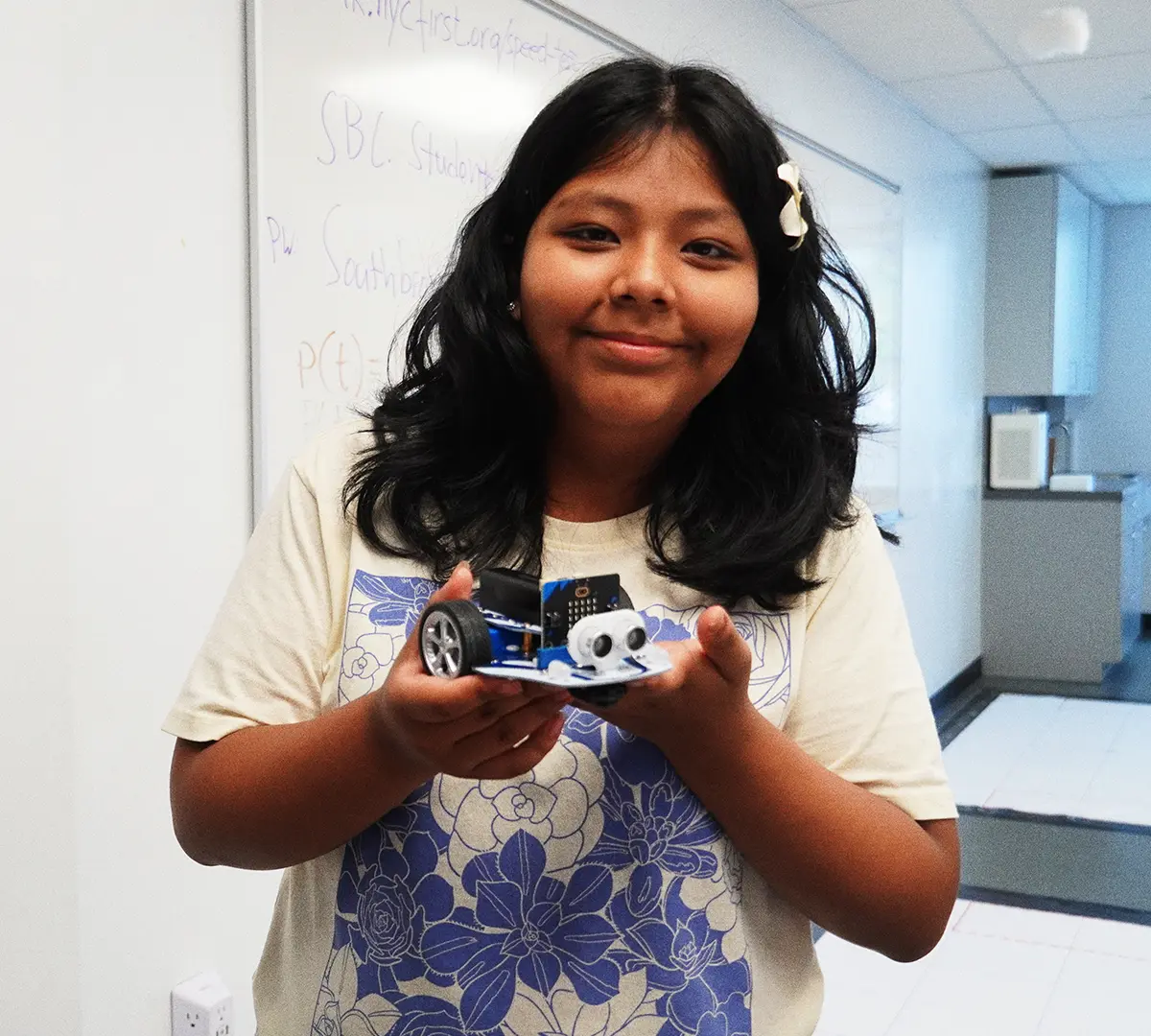
That’s where robotics education comes in. This summer, Sophia and other ninth graders walked into a very different kind of math class. XQ partnered with NYC First, a nonprofit that designs and operates robotics and STEM programs for students, to pilot Summer Sparks: a four-week math program that teaches students at three high schools across NYC, along with Crosstown High Schools in Memphis, TN, key algebraic skills through a collaborative, hands-on robotics project.
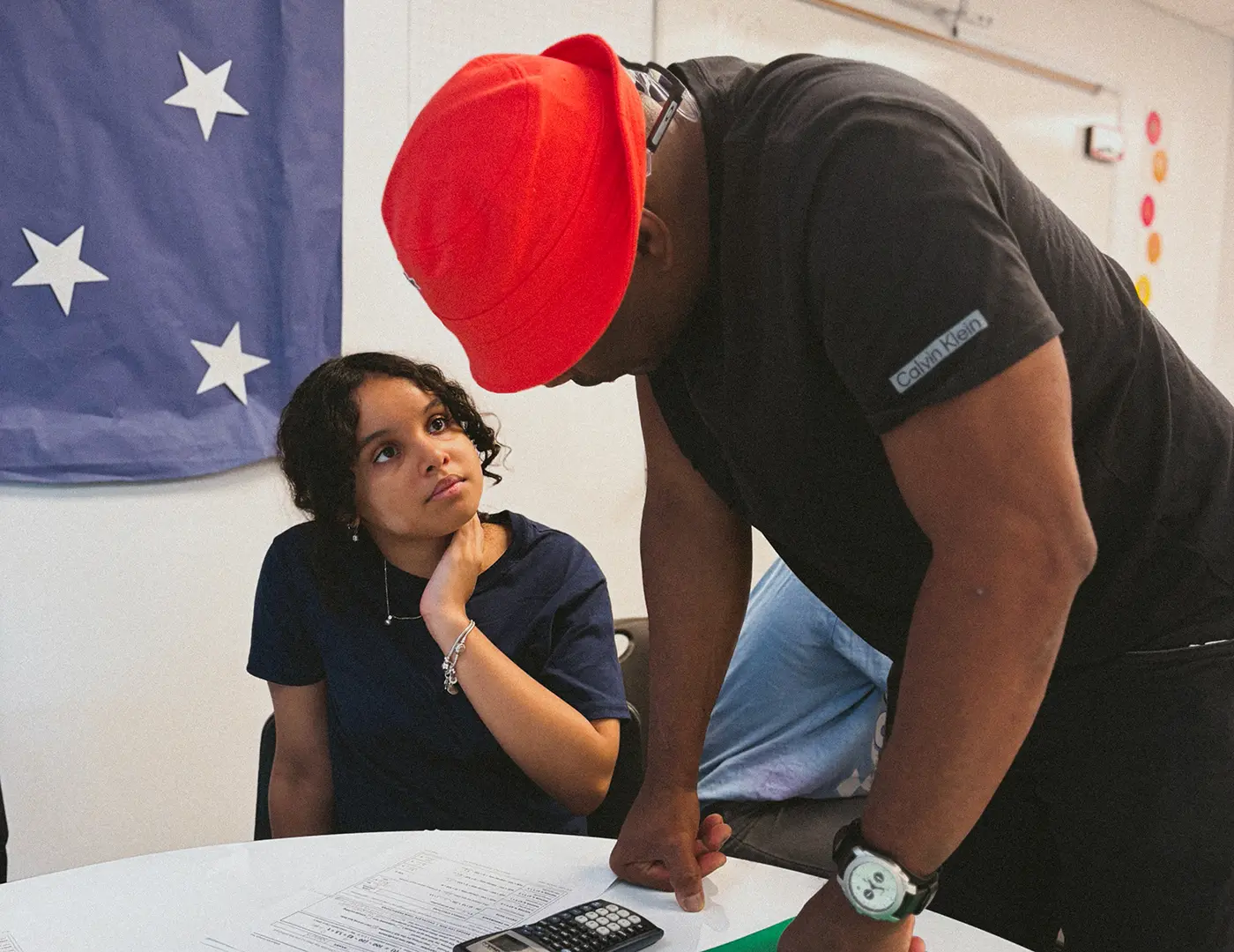

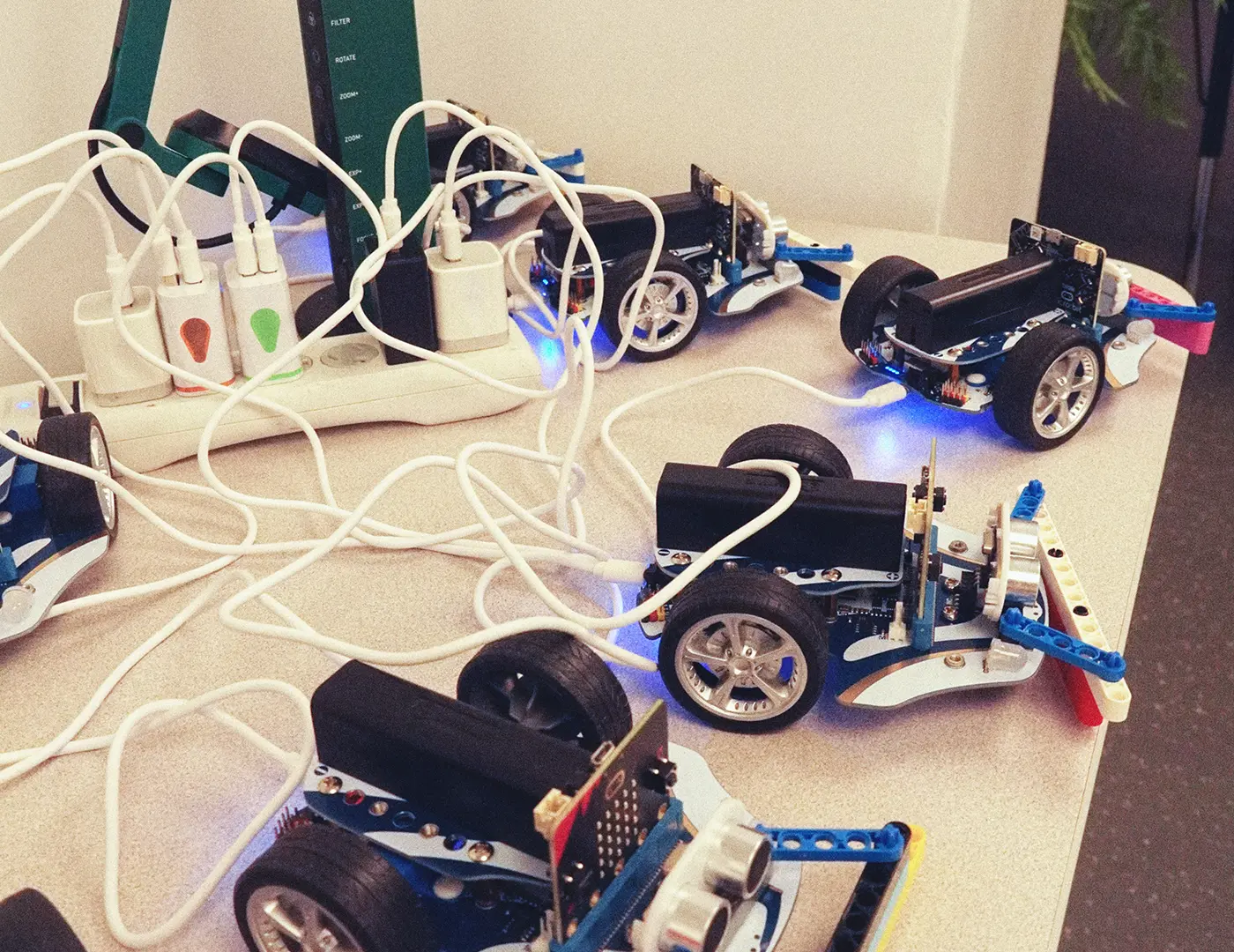
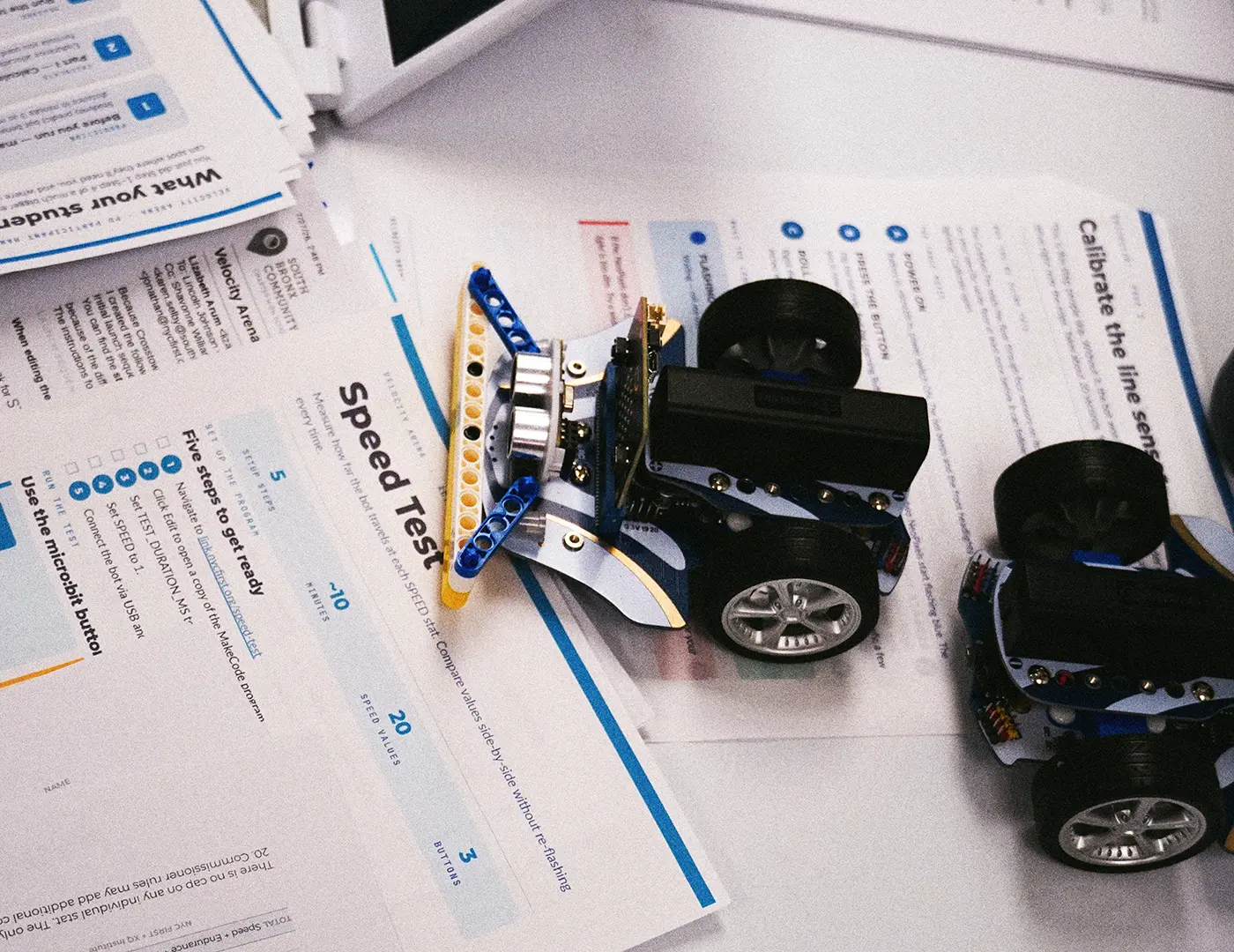
At the core of this summer course is a guided challenge titled “Velocity Arena.” The course shows students how to use algebraic formulas to program their team’s robot so that it can compete in challenges against other teams. Groups of students are given a fixed 20-point budget to divide across four categories: speed, power, turning, and endurance. This budget pushes students to make difficult decisions: put too many points into speed, and endurance takes the hit; overload power, and turning precision drops fast.


How a team splits those points between each variable directly determines how their robot performs — students aren’t only plugging Xs and Ys into formulas, they’re programming, deliberating, and making judgements based on their calculations. The math doesn’t just live on graph paper. It’s out in the hands of all the students, as they take their calculations and test them on the ground.
From Whiteboard to Wheels

When Lincoln Johnson, a seasoned math teacher at New York City Public Schools, showed up to teach the course at South Bronx Community Charter this summer, he saw how quickly students began engaging with the project. “Once they start working with the robots, you can see how interested and devoted they are,” Lincoln explained.

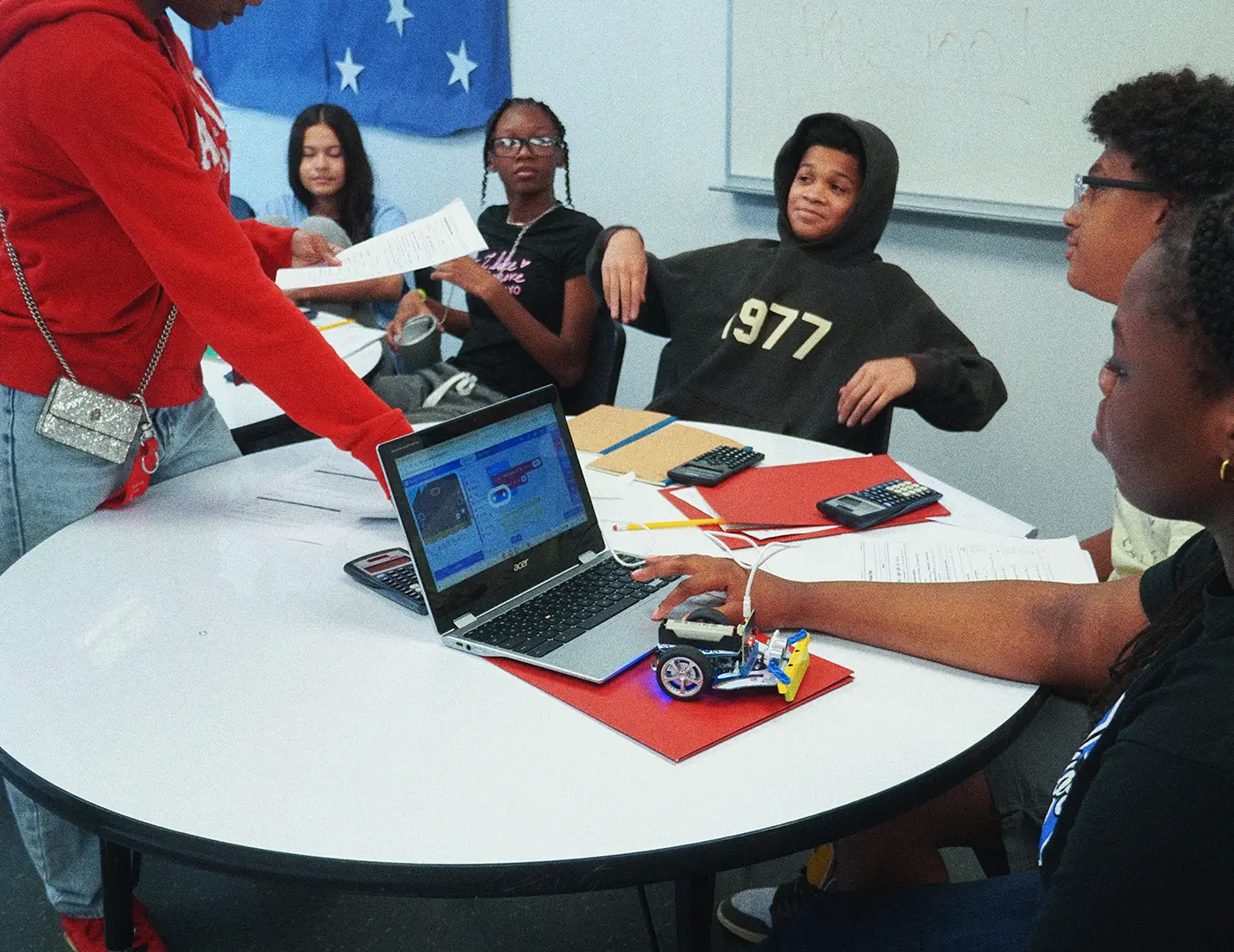
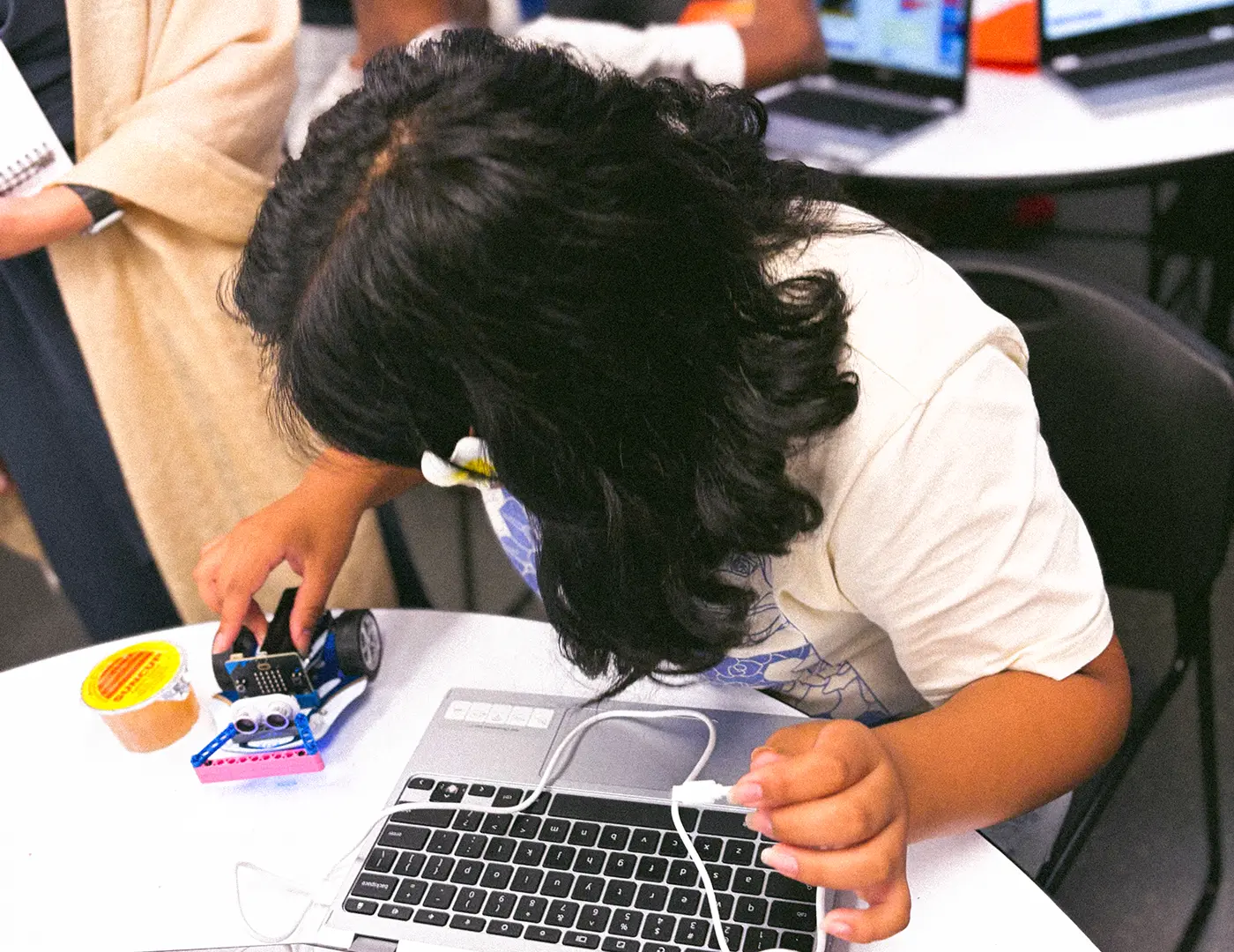
Step into Lincoln’s classroom in the afternoon, and it’s buzzing with energy. Some students are crouched on the floor, resetting a robot at the starting line for another test. Others are hunched over laptops, debugging code line by line, or huddled around a sheet of graph paper, discussing what variable they should plug in next.

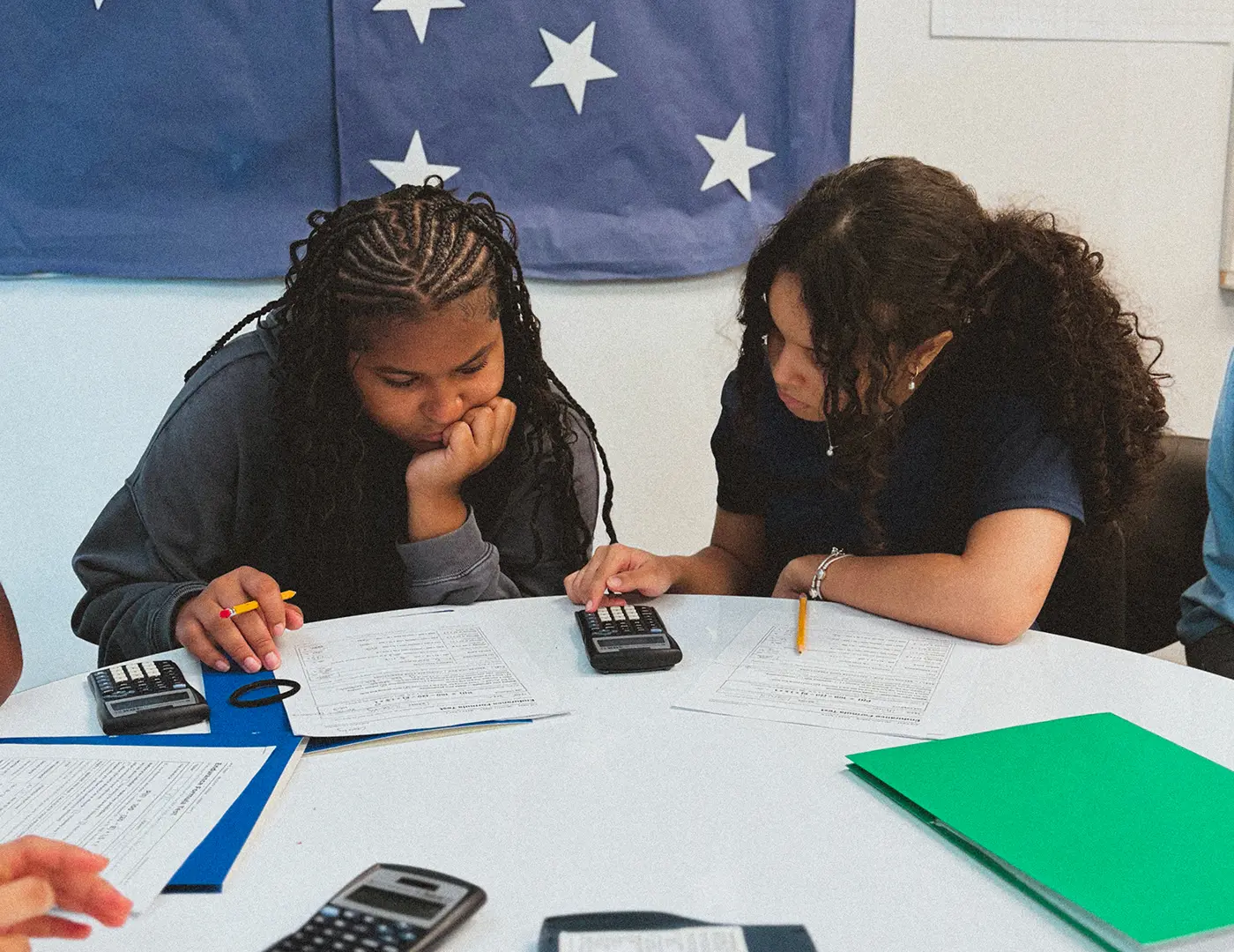
Three days in, that’s exactly where Sophia and her team found themselves: testing out how changing the speed metric of the robot would affect its performance. They’d put six of their 20 points into speed. To figure out what that meant in practice, they multiplied by 100 and divided by 20. Six became 30 percent.

“That’s how fast the robot is going,” Sophia explained, tracing her finger down the slope on her graph paper. The number had a tangible feel — it was something she could picture, having just run the tests on the robot herself.

It was a small calculation. But it’s the kind of math Sophia had been nervous to learn in high school — math that usually never quite felt real. Here, it did. The number they’d arrived at, 30 percent, wasn’t an answer to check against a key in the back of a textbook. It was how fast Sophia’s robot was about to move across the floor in front of her.

A few tables over, her classmate Fiorella was working through a different kind of adjustment. Taking a break from debugging her robot’s code, she explained that she’d come from a middle school where algebra wasn’t part of the math curriculum. Like Sophia, most of her classes had revolved around working through division and other similar math problems on whiteboards. For Fiorella, this class was her first taste of algebra — and also her first opportunity to learn math in an interactive setting.

“The big difference between middle school and this summer is that I wasn’t doing algebra before,” Fiorella explained. “I really like learning math hands-on. It helps it stick in my brain more than just memorizing. Through the robots, I’m remembering all the math better.”

“The big difference between middle school and this summer is that I wasn’t doing algebra before. I really like learning math hands-on. It helps it stick in my brain more than just memorizing. Through the robots, I’m remembering all the math better.”

Fiorella, Student at South Bronx Community Charter

Dance. Debug. Calculate.

The excitement of learning with technology comes with its own challenges — robot glitches can strike without warning, derailing students’ initials plans. But often, they’re just another math problem waiting to be solved. Over at Gotham Tech High School in Queens, one team spent an entire period trying to solve a unique problem: how to get their robot to stop doing “The Michael Jackson.” No matter the code they tried, the robot continued to drift back and forth and spin in place. Every adjustment seemed to produce the “moonwalk.” It took hours of testing, plotting out different equations, and re-writing the code before the robot finally began moving the way they wanted.

For Michael, an incoming ninth grader at Gotham Tech, that kind of trial and error represented the difference between this and a regular math class. Back in middle school, he explained, math had started to feel repetitive.

“In robotics and coding, you can use different formulas instead of the same ones,” he said. “You can use X to find out how to move your robot — so it’s more interesting.”

After a couple days of tinkering with their robots and learning the language of programming, the classes settled into a clear rhythm. One day, teams test their robots, adjusting speed, power, and endurance and recording how each change plays out on the floor. The next morning, they figure out the why — graphing the robot’s trajectory, working backward from their trials to determine which variables they should program tomorrow.

Lincoln described how, through this iterative process, students are often able to make their own connections between the math on the page and the data they collect running tests with the robots.

“Pretty fast, they start seeing the connection between how a robot is programmed and the distance it travels,” he explained. “Some of them picked up on the idea of ratio on their own — noticing that if the robot moves a certain distance in a certain time, then the power or speed should scale in a similar way.”

Why the Best Answers Come From Working Together

Even before the class began covering concepts like ratios and algebraic fractions, students already picked up the skills needed to solve the problem sitting right in front of them. When one student has a breakthrough or starts recognizing a pattern in the data, they share it with their classmates. To advance in the robotic competition, the teams have to work together to justify their calculations. Days into the class, students were engaging in deep discussion, putting their heads together to solve problems.

“Real learning happens through thinking and discussion,” Lincoln explained. “If you’re not discussing and thinking, you’re not really learning. We don’t want regurgitation — we want understanding.”

When Sophia got stuck on a certain math problem, she turned to her teammates to discuss their next move. “Sometimes I can see how the numbers are connected, but sometimes that pattern feels hidden,” she said. “When it’s really difficult, I ask my teacher, or my friends — how do all these numbers go together? How do I get to the result?”

These are questions students ask in ordinary classrooms. The difference with Summer Sparks is that students have to put their answers to work: the ideas they debate and the decisions they make become instructions for a robot they program.

A student working through a hard problem alone can quietly decide the problem is proof they don’t belong in a math classroom. A student working through the same problem alongside a teammate has a much harder time reaching that conclusion.

This fall, Sophia and her classmates at South Bronx Community Charter — along with their Summer Sparks peers at Gotham Tech and Claremont International — will walk into their first ninth-grade math class carrying something more than formulas. They’ll carry the memory of a problem that actually mattered: a robot that wouldn’t stop moonwalking, a stat budget that needed to add up to a number they could trust, teammates who helped them find the pattern when it was hidden. Math, for them, is no longer just a subject to get through. It’s a tool they’ve already used to solve something real.

Explore more bold ideas, resources, and stories on high school redesign, education innovation, student-centered learning, and more.

Share This Post